
AI compliance 2026: limits to account for
The regulatory landscape for enterprise AI shifts from voluntary guidelines to enforceable law in 2026. This transition creates immediate operational constraints for B2B organizations that rely on generative tools for client deliverables, data processing, or internal automation. Companies must now align with two distinct regulatory regimes: the European Union’s AI Act and a fragmented but tightening U.S. state-level framework.
In the EU, the AI Act becomes fully applicable on August 2, 2026, marking the end of the transition period. This legislation categorizes AI systems by risk level, imposing strict documentation, transparency, and human oversight requirements on high-risk applications. For B2B firms, this means verifying the provenance of training data and maintaining audit trails for any AI model used in compliance-sensitive workflows. The EU’s approach is comprehensive, requiring conformity assessments before deployment.
The United States follows a different path. Rather than a single federal statute, the U.S. relies on a patchwork of state laws and sector-specific regulations. Several states have already enacted AI privacy and safety laws, with more taking effect in 2026 and 2027. This includes requirements for impact assessments, bias testing, and consumer disclosure. Additionally, federal agencies are issuing sector-specific guidance, particularly in finance and healthcare, which often mirrors the EU’s risk-based logic without the same legal teeth.
This divergence creates a dual-compliance challenge. Enterprises must build flexible governance frameworks that satisfy the EU’s broad mandates while adapting to the U.S.’s specific state and industry rules. Failure to do so risks not only legal penalties but also loss of client trust, especially as professional bodies begin to treat unverified AI output as an ethical violation.
AI compliance 2026: choices that change the plan
By August 2026, the EU AI Act becomes fully enforceable, shifting AI governance from voluntary guidelines to mandatory legal obligations. For enterprise teams, this means balancing strict regulatory requirements against operational speed and cost. The core challenge is no longer just building capable models, but proving they meet safety, transparency, and risk classification standards before deployment.
The following comparison breaks down the critical tradeoffs between EU and US compliance landscapes, focusing on enforcement mechanisms, risk classification, and operational impact.
The EU approach is prescriptive, requiring early intervention and detailed documentation. The US model is reactive, focusing on post-deployment accountability and sector-specific guidelines. Enterprises operating in both regions must maintain dual compliance strategies, ensuring that EU requirements do not hinder US innovation agility, while US adaptations do not violate EU safety mandates.
Understanding these tradeoffs helps legal and engineering teams allocate resources effectively. Prioritizing high-risk AI systems for immediate EU compliance, while monitoring US state-level developments, provides a balanced path forward in 2026.
How to build your 2026 AI compliance framework
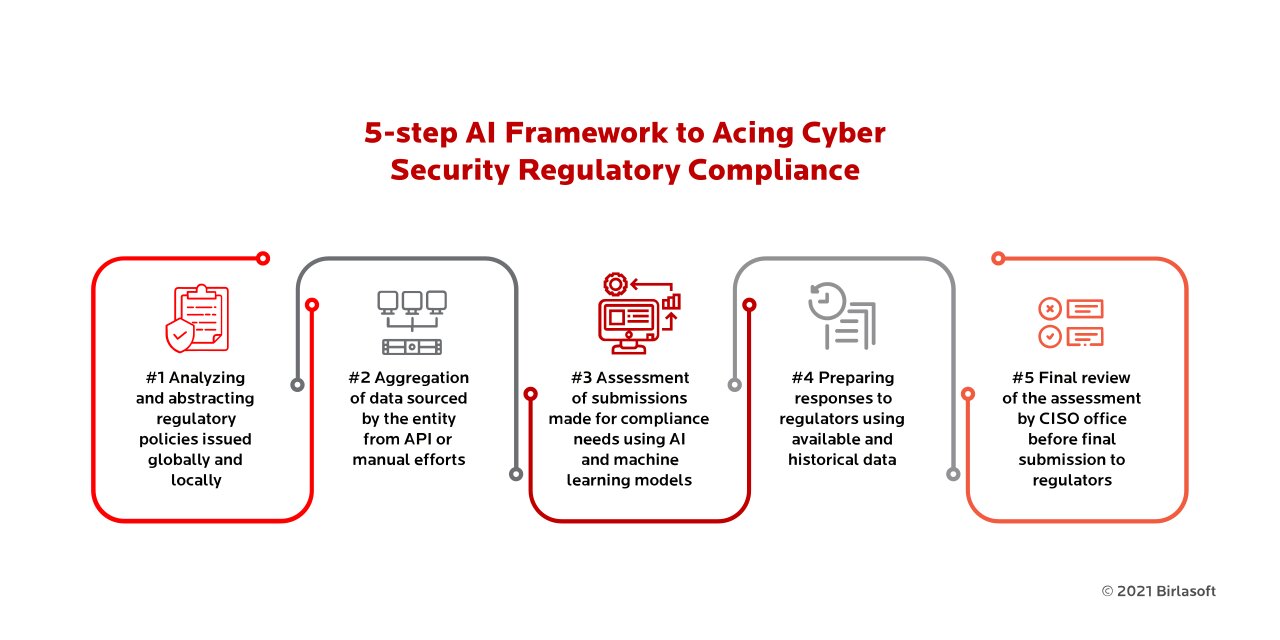
The 2026 AI Compliance Framework is no longer a theoretical concept; it is a binding operational reality for enterprises. With the EU AI Act fully applicable from August 2026 and US state-level mandates accelerating, organizations must move beyond high-level policy statements to concrete implementation. The following five-step framework outlines the essential actions required to align with these new regulatory environments.
1. Classify your AI systems by risk tier
The EU AI Act categorizes AI applications into four risk levels: unacceptable, high, limited, and minimal. High-risk systems, such as those used in critical infrastructure, education, or employment, face the most stringent requirements. You must conduct an initial audit to map every AI tool in your stack against these definitions. This classification dictates the level of documentation, human oversight, and transparency you must provide.
2. Establish human-in-the-loop verification
Regulatory bodies are increasingly focused on accountability. Using public AI tools for client work or critical business decisions without human verification is now considered a clear ethical and legal violation in many jurisdictions. Implement robust workflows where human experts review AI outputs before they are finalized or shared. This step is critical for maintaining professional liability and ensuring that automated decisions can be explained and challenged.
3. Implement continuous monitoring and logging
Compliance is not a one-time event. You must deploy systems that log AI interactions, track performance metrics, and detect drift or bias in real-time. These logs serve as the primary evidence during regulatory audits. Ensure your data retention policies align with the specific requirements of the jurisdictions in which you operate, particularly regarding the storage of training data and decision trails.
4. Adapt to emerging US state regulations
While the US lacks a single federal AI law, states like California, Colorado, and Texas are enacting specific regulations. Some are already in effect, while others come online in 2026 and 2027. Your compliance framework must be modular, allowing you to toggle specific controls based on the user's location. For example, California’s privacy laws may require different consent mechanisms than those in Texas. Stay updated on the International AI Safety Report 2026 for insights into emerging global standards that may influence US policy.
5. Train staff on compliance protocols
Technology alone cannot ensure compliance. Regular training for employees on data handling, AI ethics, and regulatory updates is essential. Ensure that legal, compliance, and technical teams understand their specific roles in the AI lifecycle. This includes knowing how to respond to data subject requests and how to escalate potential risks within the organization.
Spotting weak compliance claims
The EU AI Act’s 2026 deadline is approaching, and many vendors are still pitching "compliant" tools that lack substance. Enterprise buyers must look past marketing labels and verify specific safeguards. A common mistake is assuming general-purpose AI tools are safe for client work without human-in-the-loop verification, which now constitutes a clear ethical violation in several jurisdictions.
Another frequent error is ignoring state-level regulations. While federal rules evolve, states like California have already enacted laws, with more coming in 2026 and 2027. Buyers should also scrutinize the AI Safety Report 2026, which synthesizes evidence on general-purpose AI risks. Ignoring these emerging standards leaves enterprises exposed to legal and reputational damage.
AI compliance 2026: what to check next
Navigating the new regulatory landscape requires clear answers to common concerns. Below are the practical questions enterprise leaders are asking as 2026 compliance deadlines approach.
These questions reflect the immediate priorities for legal and compliance teams. Understanding the distinction between federal gaps and state-level mandates is essential for navigating the 2026 landscape effectively.

No comments yet. Be the first to share your thoughts!